Rack and stack
The most expensive, labor-intensive step in a facility's lifecycle.
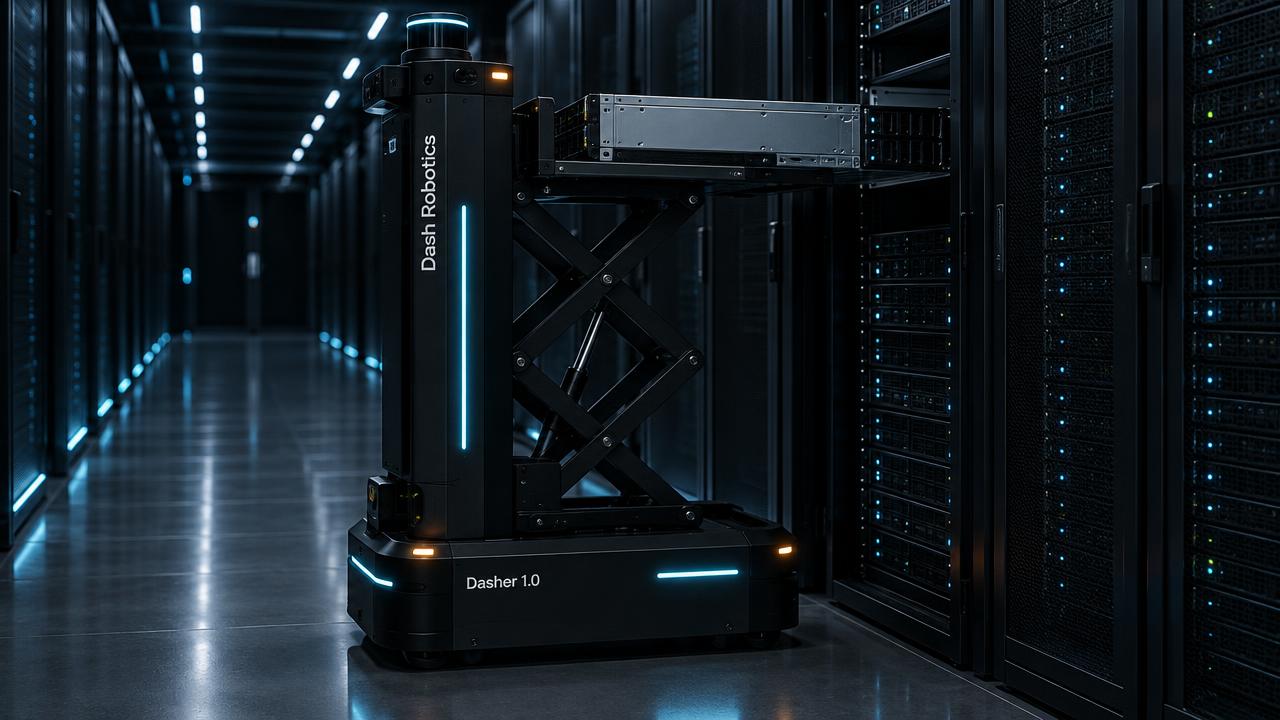
- Server mounting
- Rail install
- Commissioning
Autonomous data center robotics
We automate the manual work of deploying, commissioning, and operating data centers — driving down the cost of compute.
Starting with the repetitive, physically demanding tasks that fill a technician's day.
The problem
operators struggle to hire and keep qualified staff
of operating expenses go to labor, before the overhead of people on site
of downtime events involve human error
to rack, stack, and cable a new facility by hand
Sources: industry surveys and guidelines (Uptime Institute, ASHRAE). Available on request.
New sites are going remote. Power, land, and permitting push new sites far from skilled technicians — often next to power plants, water, or harsh environments where staffing is hard.
People carry hidden costs. Halls are cooled to 65–70°F for staff comfort; ASHRAE allows ~90°F. Each 1°F of headroom cuts cooling energy by 4–5%.
Deployment hurts most. Three technicians, two days, one rack. Every month a hall sits unfinished is capacity that isn't earning revenue.
“Lowering the cost of compute is no longer just a competitive advantage. It is becoming a national priority.”
The solution
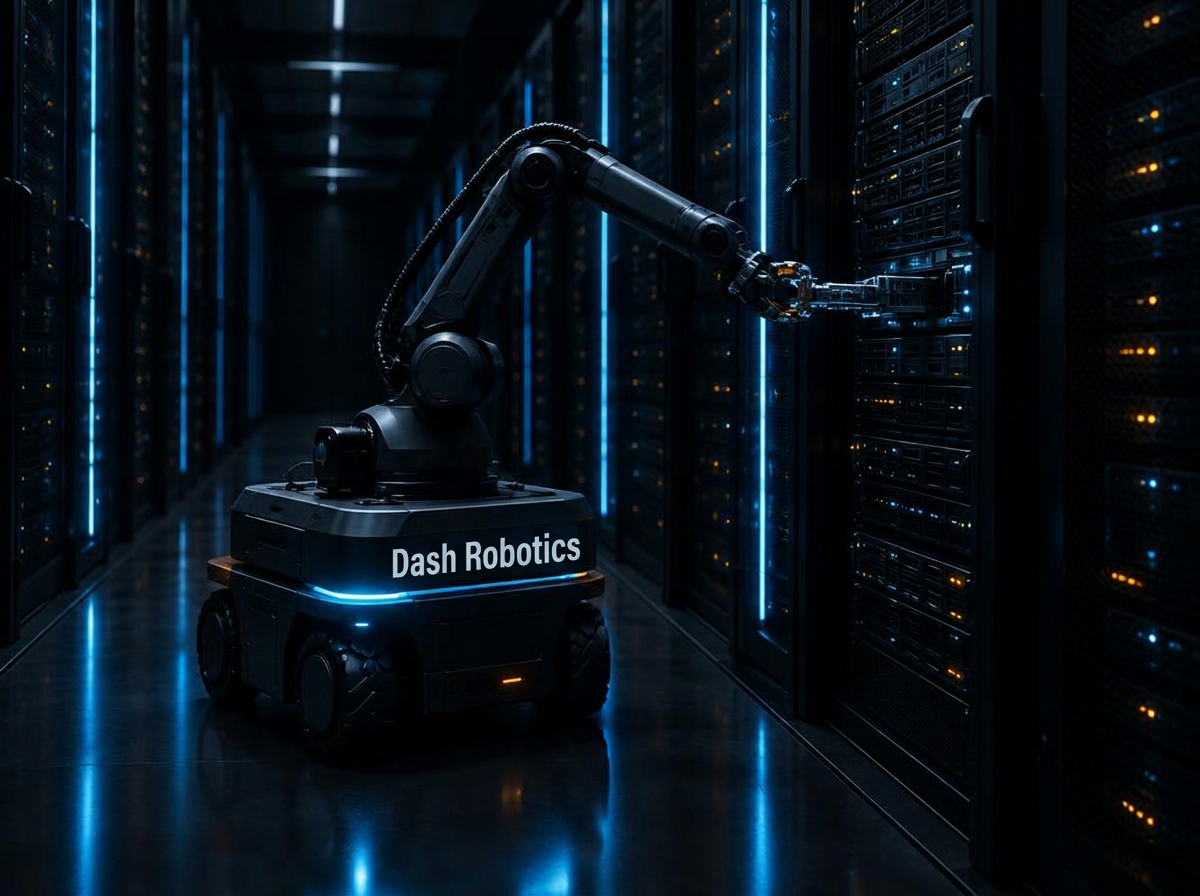
Dash builds autonomous, wheeled robots with a precision arm that inspect, diagnose, and fix hardware in data center aisles. The barrier to "lights-out" isn't software — it's the physical tasks that still need a person on the floor. Our robots remove that requirement.
01
Monitoring flags an anomaly; our robots see what software can't — LED states, loose cables, hot spots.
02
Depth cameras and vision-language-model perception localize the exact rack, chassis, bay, or port.
03
The arm performs the task: a drive hot swap, a cable reseat, or a hard reboot.
04
It confirms the LEDs turned green, logs serials and results, and closes the ticket.
What our robots automate
The most expensive, labor-intensive step in a facility's lifecycle.
Route, connect, and reseat cables to your cable map.
Replace failed drives, RAM, SSDs, and full nodes.
Detect faults, find the root cause, and dispatch a robot to fix them.
Liquid-cooling servicing (quick-disconnect couplings, leak inspection)
Decommissioning (un-racking retired hardware and reclaiming high-value parts)
Integrates with your ticketing and monitoring
Jira, ServiceNow, DCIM, Prometheus.
Follows your SOPs
ESD-safe handling, serial logging, RMA tagging.
Flexible engagement
Pilot a single hall with a subscription — no upfront capital expense.
See what our robots could take off your team's plate.
Let's talkContact
See what our robots could take off your team's plate.
Phone
+1 647-573-1540Location
San Francisco, California